
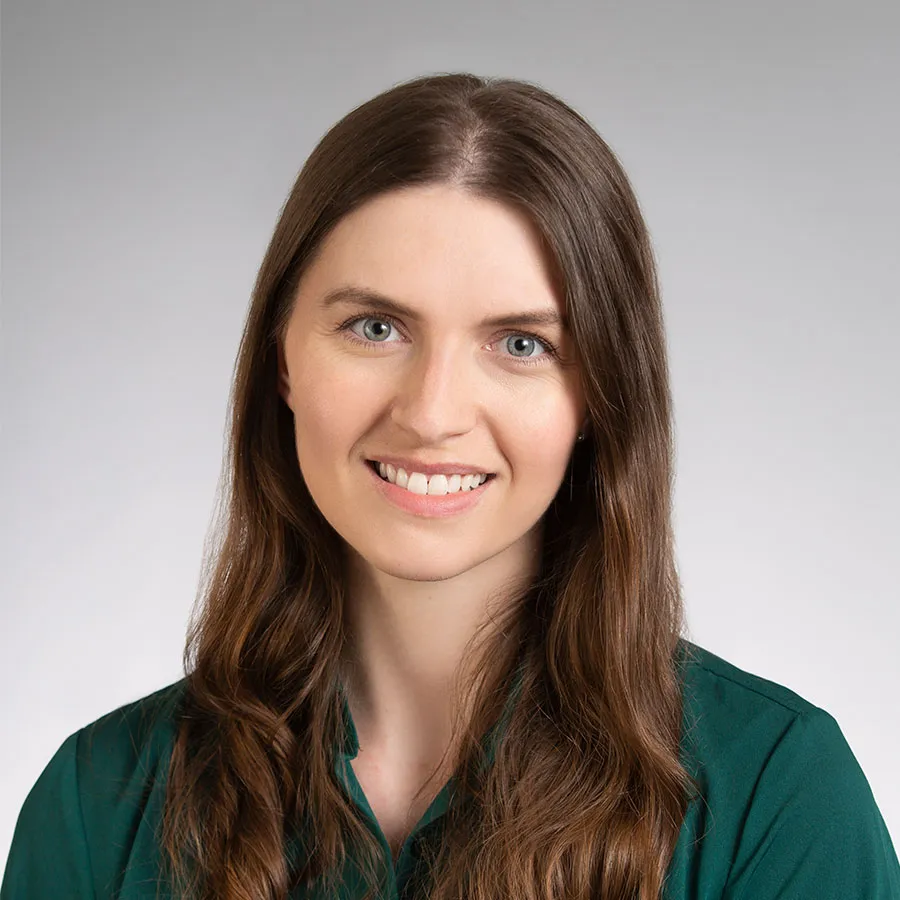
Assistant Professor
Exercise ScienceContact
kkharmon@syr.eduOrganizational Unit
- Exercise Science
- Department of Human Performance
Links
Location
Barclay Hall,, #430JSyracuse, NY 13244
Extras
Pronouns: She, HerBiography
Kylie Harmon (she/her/hers) joined the Department of Exercise Science in Fall 2022 as an assistant professor. Her position is part of the Aging, Behavioral Health, and Neuroscience research cluster.Prior to joining Syracuse University, Harmon was a graduate research assistant at the University of Central Florida (UCF) within the School of Kinesiology and Physical Therapy. There, she taught undergraduate kinesiology classes in exercise science, assessment techniques, and health and wellness. While at UCF, she also served as the research coordinator of the Neuromuscular Plasticity Laboratory within the Institute of Exercise Physiology and Rehabilitation Science. During her M.S. studies, she was the Human Performance Laboratory director within the Department of Kinesiology at California State University, Fullerton.
Harmon’s research focuses on understanding the neuromuscular adaptations that occur in response to aging, immobilization/disuse, fatigue, and strength training, with an emphasis on both changes in motor unit behavior and alterations in the corticospinal pathway. She is particularly interested in how to best preserve muscular strength during periods when resistance training is not feasible, such as during illness, injury, or immobilization.
During her doctoral studies, Harmon was awarded a Richard Tucker Gerontology Applied Research Grant from the University of Central Florida Learning Institute for Elders (LIFE) to support her research in older adults. To support her dissertation project, Harmon was awarded the University of Central Florida Graduate Dean’s Completion Fellowship.
Harmon was named recipient of the University of Central Florida Division of Kinesiology Doctoral Scholar Award and Graduate Writing Award supported by the American Kinesiology Association. She is an active member of the National Strength and Conditioning Association (NSCA) and was awarded both the NSCA Foundation’s Women’s Scholarship and Challenge Scholarship.
Harmon is a Certified Strength and Conditioning Specialist through the National Strength and Conditioning Association.
Education
- Ph.D., University of Central Florida, FL, Area of Emphasis: Exercise Physiology Track
- M.S., California State University, CA, . Major: Kinesiology
- B.A., State University of New York at Binghamton, NY, . Major: Russian Studies
Active Research
Sponsored Research
- Kylie Harmon (PD/PI) Janet Wilmoth (Co-Investigator) , Resistance Training Specificity Among Older Adults - National Institutes of Health (NIH)/DHHS - Federal Agencies Grant. End Date: 2029-08-31
- Kylie Harmon (PD/PI) , A Combined Program of Resistance Training and Action Observation for Sarcopenia Prevention - National Strength and Conditioning Assoc - Not for Profit/Foundation. End Date: 2028-06-30
- Kylie Harmon (PD/PI) Tiago Barreira (Co-Investigator) , Combined rehabilitation approaches for preservation of function following limb immobilization - National Institutes of Health (NIH)/DHHS - Federal Agencies Grant. End Date: 2027-11-30
Other Grants, Fellowships, Contracts, and Gifts
- Kylie Harmon, Impact of Daily Neuromuscular Electrical Stimulation on Glucose Levels - Syracuse Office of Undergraduate Research & Creative Engagement (SOURCE) Research Assistant Grant. End Date: 2027-05-31
Published Scholarship
Publications
- Harmon, K.K., Pourhatami, Z., Malinowski, D., Girts, R.M., Beausejour, J.P., Wydra, J.S., Carr, J.C., Garcia, J. and Stock, M.S., 2025. Correlation of Physical Activity Level with Muscle Strength and Size During One Week of Knee Joint Immobilization. Journal of Functional Morphology and Kinesiology, [online] 10(2), p.192. https://doi.org/10.3390/jfmk10020192.
- Harmon, K.K., Girts, R.M., Rodriguez, G., Beausejour, J.P., Pagan, J.I., Carr, J.C., Garcia, J., Roberts, M.D., Hahs‐Vaughn, D.L., Stout, J.R., Fukuda, D.H. and Stock, M.S., 2024. Combined action observation and mental imagery versus neuromuscular electrical stimulation as novel therapeutics during short‐term knee immobilization. Experimental Physiology, [online] 109(7), pp.1145–1162. https://doi.org/10.1113/ep091827.
- Pagan, J.I., Bradshaw, B.A., Bejte, B., Hart, J.N., Perez, V., Knowles, K.S., Beausejour, J.P., Luzadder, M., Menger, R., Osorio, C., Harmon, K.K., Hanney, W.J., Wilson, A.T., Stout, J.R. and Stock, M.S., 2024. Task-specific resistance training adaptations in older adults: comparing traditional and functional exercise interventions. Frontiers in Aging, [online] 5. https://doi.org/10.3389/fragi.2024.1335534.
- MacLennan, R.J., Hernandez-Sarabia, J.A., Reese, S.M., Shields, J.E., Smith, C.M., Stute, K., Collyar, J., Olmos, A.A., Danielson, T.L., MacLennan, D.L., Pagan, J.I., Girts, R.M., Harmon, K.K., Coker, N., Carr, J.C., Ye, X., Perry, J.W., Stock, M.S. and DeFreitas, J.M., 2024. fNIRS is capable of distinguishing laterality of lower body contractions. Experimental Brain Research, [online] 242(5), pp.1115–1126. https://doi.org/10.1007/s00221-024-06798-8.
- Girts, R.M., Harmon, K.K., Rodriguez, G., Beausejour, J.P., Pagan, J.I., Carr, J.C., Garcia, J., Stout, J.R., Fukuda, D.H. and Stock, M.S., 2024. Sex differences in muscle-quality recovery following one week of knee joint immobilization and subsequent retraining. Applied Physiology, Nutrition, and Metabolism, [online] 49(6), pp.805–817. https://doi.org/10.1139/apnm-2023-0242.
- Parsowith, E.J., Stock, M.S., Girts, R.M., Beausejour, J.P., Alberto, A., Carr, J.C. and Harmon, K.K., 2023. The Influence of Resistance Training Experience on the Efficacy of Motor Imagery for Acutely Increasing Corticospinal Excitability. Brain Sciences, [online] 13(12), p.1635. https://doi.org/10.3390/brainsci13121635.
- Knowles, K.S., Beausejour, J.P., Harmon, K.K., Girts, R.M., Fukuda, D.H., Kidgell, D.J. and Stock, M.S., 2023. The Influence of Transcranial Magnetic Stimulation Interpulse Interval Duration on Knee Extensor Corticospinal Excitability. Brain Connectivity, [online] 13(9), pp.521–527. https://doi.org/10.1089/brain.2023.0020.
- Beausejour, J.P., Bohlen, P., Harmon, K.K., Girts, R.M., Pagan, J.I., Hahs-Vaughn, D.L., Herda, T.J. and Stock, M.S., 2023. A comparison of techniques for verifying the accuracy of precision decomposition-derived relationships between motor unit firing rates and recruitment thresholds from surface EMG signals. Experimental Brain Research, [online] 241(10), pp.2547–2560. https://doi.org/10.1007/s00221-023-06694-7.
- Candow, D.G., Forbes, S.C., Ostojic, S.M., Prokopidis, K., Stock, M.S., Harmon, K.K. and Faulkner, P., 2023. “Heads Up” for Creatine Supplementation and its Potential Applications for Brain Health and Function. Sports Medicine, [online] 53(S1), pp.49–65. https://doi.org/10.1007/s40279-023-01870-9.
- Pagan, J.I., Harmon, K.K., Girts, R.M., MacLennan, R.J., Beausejour, J.P., Hernandez-Sarabia, J.A., Coker, N.A., Carr, J.C., Ye, X., DeFreitas, J.M. and Stock, M.S., 2023. Sex-Specific Reliability of Lower-Limb Corticospinal Excitability and Silent Periods. Journal of Strength & Conditioning Research, [online] 37(9), pp.1882–1887. https://doi.org/10.1519/jsc.0000000000004525.
Presentations
- Matt S StockKylie K HarmonJoshua C CarrJustin W Andrushko (2026). Neuromuscular adaptations to disuse: Mechanisms, interventions, and knowledge gaps [Symposium]. Presented at International Society of Electrophysiology and Kinesiology (ISEK) Congress, Jyväskylä, Finland, 2026-06-24.
- Kylie K HarmonPaula C SanematsuMatthew K ArmstrongEduardo C CostaKevin S HeffernanTiago V Barreira (2026). 24 H physical behaviors composition in US adults aged 40-64 years: NHANES 2011-2014 [Abstract]. Presented at American College of Sports Medicine Annual Meeting, Salt Lake City, UT, United States, 2026-05-26.
- Tiago V BarreiraPaula C SanematsuMatthew K ArmstrongEduardo C CostaKylie K HarmonKevin S Heffernan (2026). 24 H physical behaviors composition in US older adults: NHANES 2011-2014 [Abstract]. Presented at American College of Sports Medicine Annual Meeting, Salt Lake City, UT, United States, 2026-05-26.
- Rylie S DiMaioMark PetryFarmchan SaechaoKylie K HarmonShort-term creatine monohydrate supplementation does not impact muscle quality [Abstract]. Presented at Mid-Atlantic Regional Chapter of the ACSM Conference, Harrisburg, PA, United States, 2025-11-07.
- Zahra PourhatamiFarmchan SaechaoRylie S DiMaioKylie K HarmonThe acute effects of action observation perspective on lower limb corticospinal excitability [Abstract]. Presented at Mid-Atlantic Regional Chapter of the ACSM Annual Meeting, Harrisburg, PA, United States, 2025-11-07.
- Eli BeinsteinFarmchan SaechaoZahra PourhatamiRylie S DiMaioKylie K HarmonThe acute effects of action observation perspective on lower limb strength [Abstract]. Presented at Mid-Atlantic Regional Chapter of the ACSM Conference, Harrisburg, PA, United States, 2025-11-07.
- Farmchan SaechaoMark PetryRylie S DiMaioEli BeinsteinKylie K HarmonThree Days of Creatine Monohydrate Supplementation Does Not Impact Lower Limb Corticospinal Excitability [Abstract]. Presented at Mid-Atlantic Regional Chapter of the ACSM Annual Meeting, Harrisburg, PA, United States, 2025-11-07.
- Rylie S DiMaioZahra PourhatamiFarmchan SaechaoDustin D DunnickRyan M GirtsKylie K HarmonExamination and quantification of motor evoked potentials in a non-target resting leg [Abstract]. Presented at National Strength and Conditioning Association Annual Meeting, Kansas City, MO, United States, 2025-07-18.
- Farmchan SaechaoRylie S DiMaioZahra PourhatamiDustin D DunnickRyan M GirtsKylie K HarmonImpact of acute action observation on flexor carpi radialis corticospinal excitability in older adults [Abstract]. Presented at National Strength and Conditioning Association Annual Meeting, Kansas City, MO, United States, 2025-07-18.
- Zahra PourhatamiFarmchan SaechaoRylie S DiMaioDustin D DunnickRyan M GirtsKylie K HarmonNeuromuscular electrical stimulation does not affect echo intensity during short-term knee immobilization [Abstract]. Presented at National Strength and Conditioning Association Annual Meeting, Kansas City, MO, United States, 2025-07-18.
Active Service
Professional Service
- Reviewer/Referee, European Journal of Applied Physiology, Serve as peer-reviewer for submitted manuscripts per the handling editor. (active since: 2025)
- Reviewer/Referee, Journal of Aging and Physical Activity (active since: 2025)
- Reviewer/Referee, Frontiers in Medicine (active since: 2025)
- Reviewer/Referee, Experimental Gerontology (active since: 2020)
- Reviewer/Referee, International Journal of Kinesiology & Sports Science (active since: 2019)
- Reviewer/Referee, Journal of Science in Sport and Exercise (active since: 2019)
- Reviewer/Referee, Frontiers in Physiology (active since: 2018)
- Reviewer/Referee, International Journal of Exercise Science (active since: 2017)
- Reviewer/Referee, Kinesiology Journal (active since: 2016)
- Reviewer/Referee, Journal of Strength and Conditioning Research (active since: 2014)
- Reviewer/Referee, Strength and Conditioning Journal (active since: 2014)
Honors, Awards, and Recognition
- Faculty of the Year Award for Excellence in Research, Falk College, Syracuse University
- Educator of the Year award, National Strength and Conditioning Association (received: 2023)
- National Research Award, Alpha Eta Honor Society for Allied Health (received: 2023)
- Educator of the Year award, National Strength and Conditioning Association
- Terry J. Housh Young Investigator of the Year award, National Strength and Conditioning Association
Licensures and Certifications
- Certified Strength and Conditioning Specialist, National Strength and Conditioning Association. Certified Strength and Conditioning Specialists® (CSCS®) are professionals who apply scientific knowledge to train athletes for the primary goal of improving athletic performance. They conduct sport-specific testing sessions, design and implement safe and effective strength training and conditioning programs and provide guidance regarding nutrition and injury prevention. Recognizing that their area of expertise is separate and distinct, CSCSs consult with and refer athletes to other professionals when appropriate.. (since: 2014)
Recent Media Mentions:
- Mind Over Matter: Exercise Science Professor Kylie Harmon Investigates the Ability to Preserve Muscle Mass and Strength During ImmobilizationDecember 2024)
- Read and Publish Agreements and the Impact of Open ScholarshipNovember 2024)
- University of Central Florida Researcher Has Provided New Study Findings on Transcranial Magnetic Stimulation (Sex-Specific Reliability of Lower-Limb Corticospinal Excitability and Silent Periods) (11 September 2023)
- How often should you change up your workout routine? (23 April 2023)
Organizational Unit
- Exercise Science
- Department of Human Performance
Links
Location
Barclay Hall,, #430JSyracuse, NY 13244